Securing effective pest control services Oklahoma City homeowners rely on requires precise diagnostic assessment of regional biology, local soil characteristics, and physical building envelopes across Oklahoma County. Subterranean termites exploit foundation expansion joints, brown recluse spiders harbor in historic attic insulation, and rodents track moisture along municipal infrastructure.

A pest control services company in Oklahoma City is a specialized structural remediation contractor that identifies, eliminates, and mechanically excludes insect and vertebrate species from residential and commercial structures.
Every service reflects the same meticulous attention to detail, whether it's a single job or a larger pest control services project across Oklahoma City.
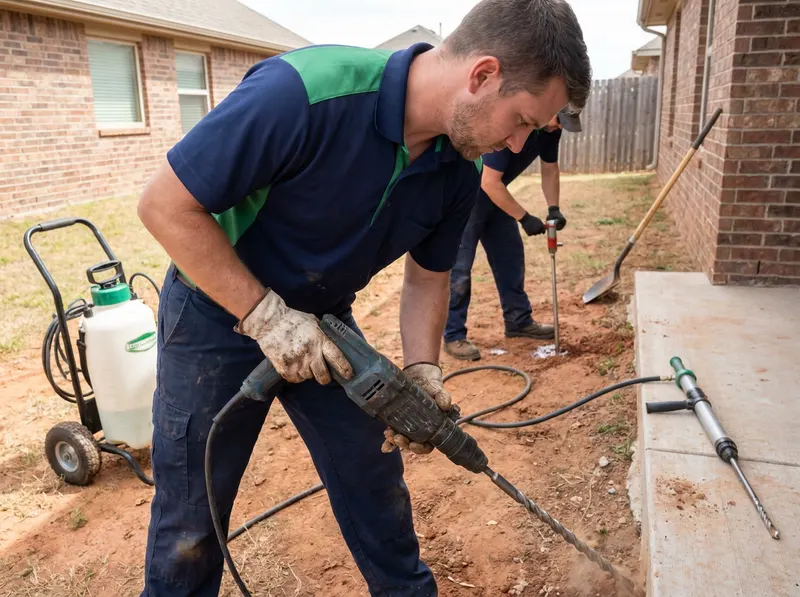
Subterranean termite defense utilizes deep liquid soil trenching or non-repellent bait stations targeting native Reticulitermes flavipes and Reticulitermes virginicus. Technicians assess soil-to-wood contact points, brick veneer weep holes, plumbing penetrations through slab foundations, and wooden porch additions. Liquid applications create an undetectable, continuous active barrier that foraging workers pass through without alarm, transferring the toxicant back to suppress the central subterranean colony nest through social grooming. For post-construction slab houses, rotary hammer drilling establishes uniform vertical fluid barriers through concrete walkways, expansion seams, and garage aprons. Baited monitoring systems use micro-perforated stations embedded flush with turf lines, intercepting foragers moving through lateral soil strata before they construct shelter mud tubes over stem walls.
Get a quote →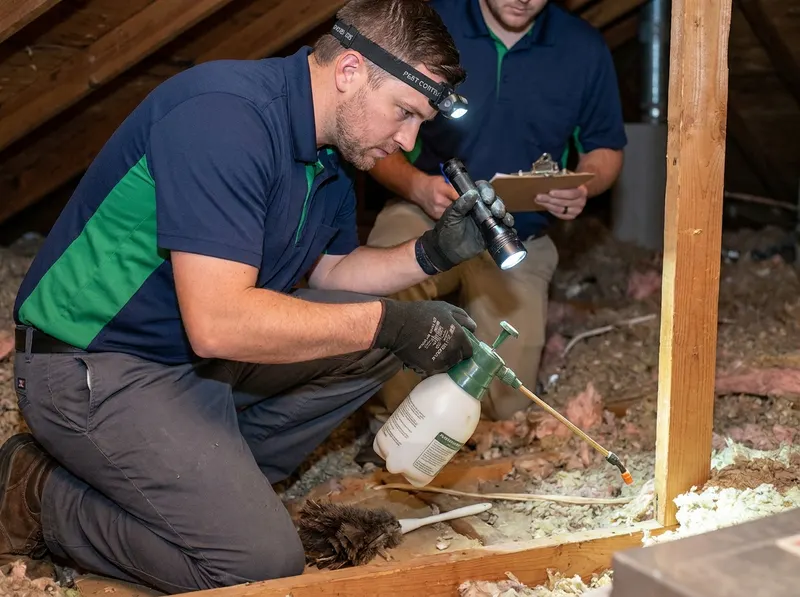
Remediation for Loxosceles reclusa relies on comprehensive structural void dusting, harborage reduction, and perimeter physical interception. Technicians apply non-repellent silica aerogel or micro-pulverized synthetic pyrethroid dust into structural wall cavities, drop ceilings, crawlspace sill plates, and unfinished attic rafters where spiders nest undisturbed. Physical monitor placement maps localized activity gradients throughout the living footprint without applying wet residues on exposed baseboards, which prove ineffective against long-legged hunting arachnids. Treatments extend behind electrical faceplates, junction boxes, and HVAC return chases to neutralize hidden micro-colonies. Controlled exterior perimeter treatments intercept wandering males during peak summer mating movements, stopping colonization before spiders settle inside stored household goods, drop-ceilings, or framed wardrobe spaces.
Get a quote →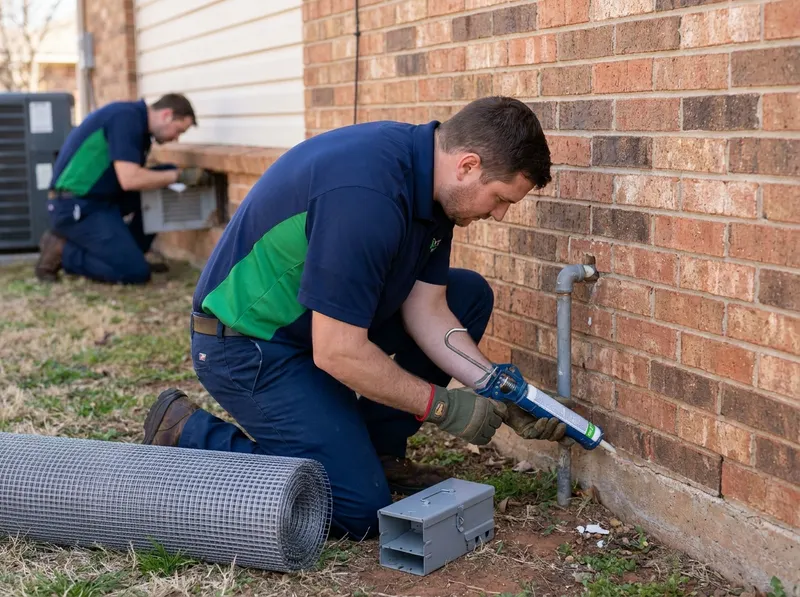
Rodent management for Norway rats, roof rats, and Mus musculus pairs internal mechanical removal with permanent structural exclusion. Technicians close exterior entry points larger than one-quarter inch using rust-proof wire mesh, metal flashing, and elastomeric compounds. All interior baiting and mechanical traps remain secured inside tamper-resistant enclosures positioned strictly out of human reach, focusing along primary travel runways inside attics, crawlspaces, and equipment chases. Inspections pinpoint gnaw markings, greasy sebum trails, and structural damage along air conditioner conduit penetrations and garage door corner gaskets. Removing accessible nesting sites and sealing roofline fascia junctions ensures that migrating rodents cannot re-enter structures during cold autumn temperature drops across Oklahoma County.
Get a quote →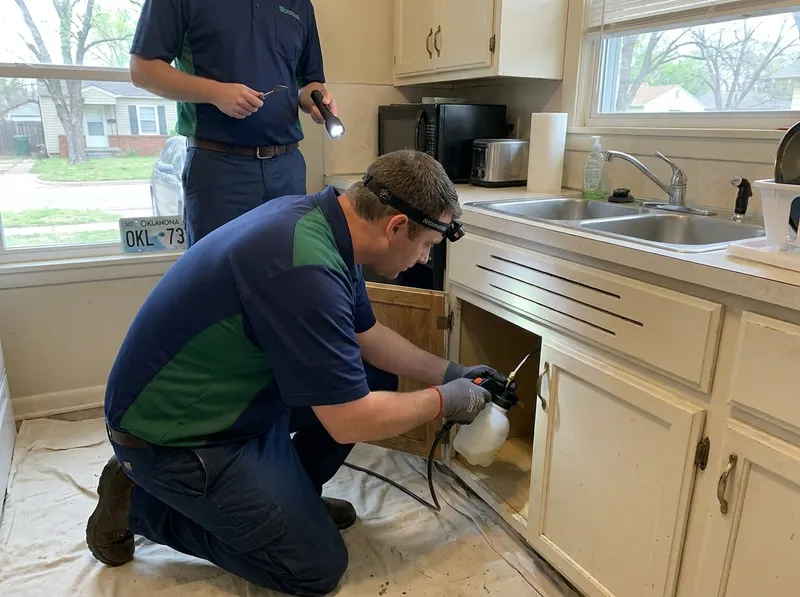
German cockroach infestations require multi-stage baiting using insect growth regulators and targeted gel matrices containing rotating active ingredients. Focus centers on motor housings, under-sink plumbing collars, dishwasher mechanical compartments, and electrical chases where moisture and warmth support continuous reproduction. Technicians apply micro-bead baits in protected cracks, avoiding broad surface sprays that contaminate food preparation counters or repel roaches into untreated interior walls. Perimeter treatments for larger American and Oriental cockroaches address exterior slab perimeters, crawlspace access doors, floor drains, and water meter boxes where sewer vapors and high humidity foster perimeter aggregations. Follow-up monitoring checks nymph hatching rates and egg capsule depletion to guarantee total population interruption across multi-family and single-family dwellings.
Get a quote →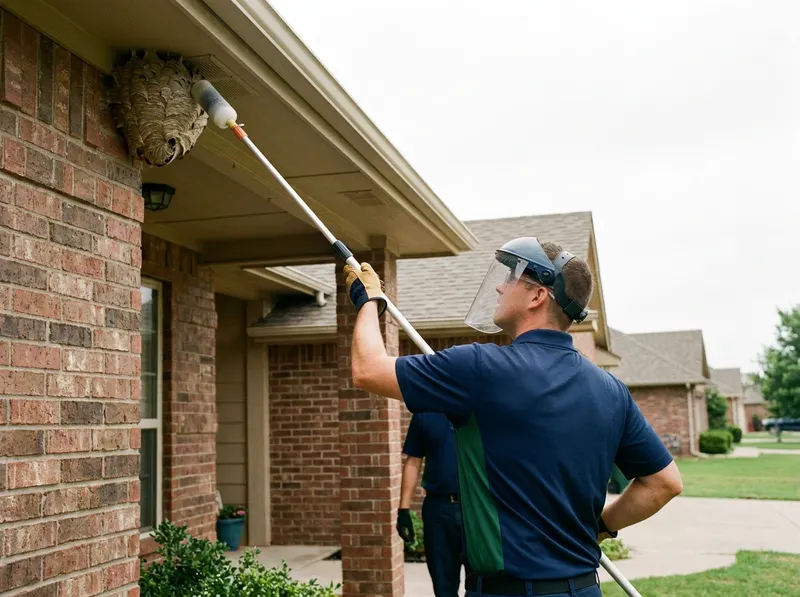
Paper wasps, bald-faced hornets, and yellowjackets nesting under soffits, eave corners, and exterior fascia are eliminated via pressurized contact formulations and physical detachment. Technicians physically remove structural nests and apply microencapsulated residual deterrents across vulnerable structural overhangs to interrupt queen re-nesting cycles during peak summer colonization. Specialized equipment treats subterranean yellowjacket burrows hidden within landscape mulch or abandoned rodent runs, preventing accidental stings during lawn maintenance. For architectural structures with complex rooflines, high-reach power application lances inject knock-down agents straight into hidden eave transitions without requiring ladders against delicate siding or historical trim. Preventative spring treatments target overwintered fertile queens seeking sheltered nesting niches across sunny residential elevations.
Get a quote →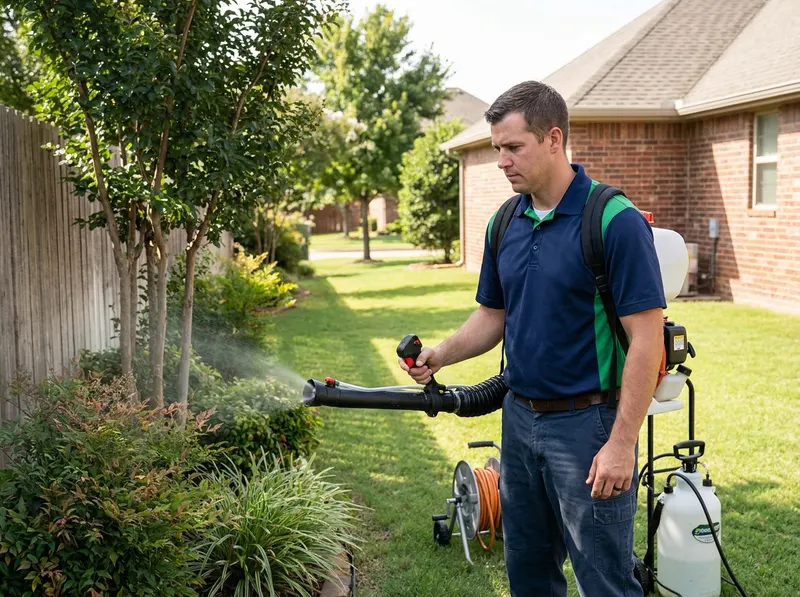
Seasonal mosquito management pairs standing-water biological larvicides with ultra-low volume perimeter foliage treatments. Technicians target lower shrub canopies, shaded ground covers, deck undersides, and structural drainage zones where adult Culex and Aedes mosquitoes rest during midday heat, interrupting the breeding cycle across high-humidity suburban parcels. Bacilllus thuringiensis israelensis briquettes are applied directly into storm grates, decorative fountains, and low-lying ditches to kill aquatic larvae without threatening birds or non-target aquatic organisms. Monthly applications timed between May and October maintain continuous residual surface barriers on leafy harborages, reducing biting adult populations during outdoor recreation periods and mitigating insect-borne disease vectors like West Nile virus across local communities.
Get a quote →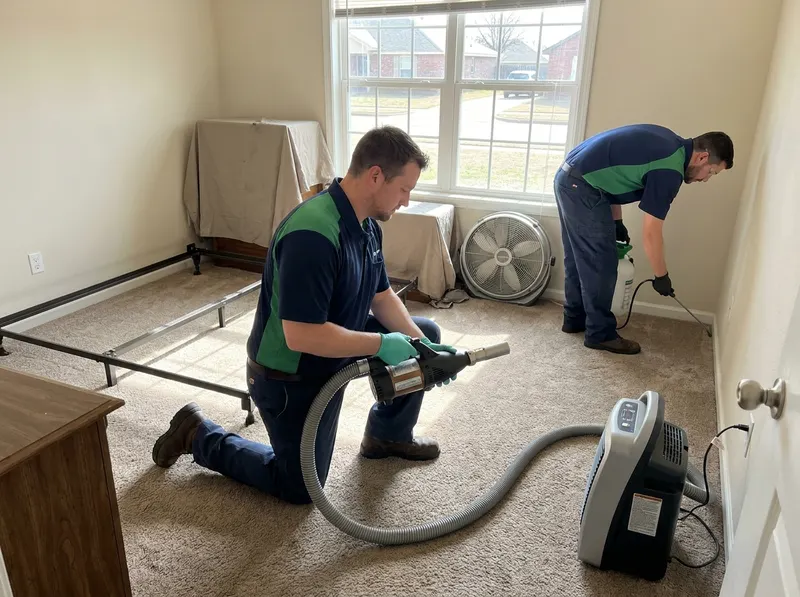
Cimex lectularius management combines targeted crack-and-crevice residual treatments with high-precision heat applications or localized cryo-freezing methods. Technicians inspect mattress seams, box springs, headboards, baseboard perimeters, structural picture frames, and electrical junction boxes where bed bugs aggregate during daylight hours. Dual-action insect growth regulators prevent surviving nymphs from molting into breeding adults, while desiccant dusts injected beneath wall baseboards dehydrate foraging adults. Treatment protocols eliminate the need to discard high-value furniture or personal mattresses when structural preparation standards are maintained. Post-treatment verification utilizes specialized canine detection checks or adhesive active monitoring stations to verify full eradication across residential bedrooms and hospitality suites.
Get a quote →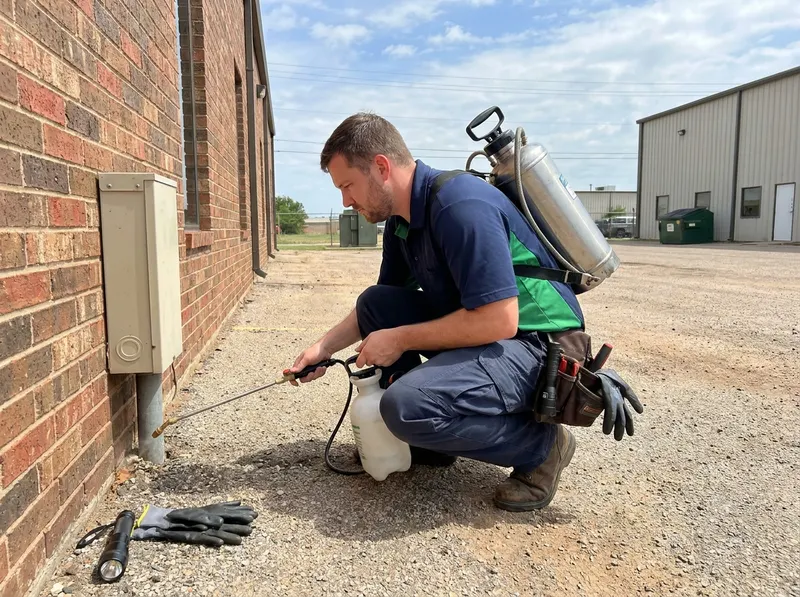
Commercial remediation establishes regulatory-compliant defense for food preparation sites, industrial warehouses, medical facilities, and property management portfolios. Protocols include detailed structural monitoring logs, floor drain bio-remediation, perimeter exclusion maintenance, and non-disruptive early-morning service intervals tailored to municipal health standards. Integrated pest management reports satisfy third-party food safety audits, documenting pest activity indices, pesticide application volumes, and mechanical barrier integrity. Regular inspections target loading docks, trash compactor pads, suspended acoustical ceiling grids, and bulk grain storage areas. Automated electronic monitoring units verify rodent perimeter security 24 hours a day, providing audit-ready paperwork that protects commercial business continuity and sanitation integrity.
Get a quote →You get a firm, itemized quote for your pest control services before any work begins, no surprises, no pressure.
Careful prep, tidy work, and a full cleanup when we are done. We treat your home and belongings like our own.
The same trusted, background-checked team from the first call to the final check.
Selecting structural pest remediation depends entirely on target biology, building architecture, and infestation severity. If an active subterranean termite colony has breached a stem wall or sill plate, structural non-repellent liquid trenching or targeted monitoring bait installations are required; if you simply want proactive exterior defense, perimeter granular applications provide adequate seasonal boundary maintenance. The operational trade-off is upfront remediation complexity and physical soil disruption versus the long-term risk of hidden interior framing hollow-out.
For brown recluse populations inside multi-layer attics throughout Heritage Hills or Crown Heights, choose micro-fine dry inorganic dust injections over baseboard aerosol treatments; liquid sprays settle on open floorboards without reaching harborages and leave surviving spiders dispersed deeper into living quarters. If managing seasonal commensal rodents, select physical exclusion and internal mechanical trapping; using anticoagulant baits exclusively without structural sealing leads to foul odor hazards from carcasses trapped behind interior drywall cavities. If confronting German cockroach aggregations inside kitchen cabinetry, choose high-density gel baiting paired with insect growth regulators rather than total-release aerosol foggers; aerosol foggers trigger rapid population budding into adjacent bedrooms, whereas stomach-action baits achieve complete nest mortality via secondary coprophagy transfer.
For outdoor perimeter biting pests like mosquitoes, automated residual foliage applications target shaded resting zones, whereas mechanical water evacuation solves the underlying larval breeding grounds. For wood-boring powderpost beetles in damp subfloors, topical borate timber saturations deliver permanent wood preservation, whereas standard liquid surface sprays degrade within 90 days and leave interior larvae intact. Balancing chemical longevity, application placement, and structural repair dictates the true financial and protective outcome for any property.
Direct consultation at (405) 212-1067 provides an objective structural evaluation. Clear digital images sent via messaging assist technicians in assessing localized wood damage or specimens before dispatch.
Every project gets a firm, written price after a free on-site visit. Ranges below for orientation.
Tell us about your pest control services job and we'll send a clear, written quote, usually the same day. Or just call and talk to a real Oklahoma City pro.
(405) 212-1067
Oklahoma City sits directly over dense Permian red clay formations that expand dramatically during spring deluges and shrink during arid summer heat. This soil shifting fractures concrete stem walls and pulls exterior soil grades away from foundations, opening direct subterranean avenues for Reticulitermes termites and overwintering rodents. Older, uninsulated crawlspaces in historic neighborhoods like Mesta Park and Heritage Hills trap ambient humidity from the North Canadian River basin, generating an ideal sub-floor habitat for wood-destroying insects and brown recluse populations. Modern suburban developments near Quail Springs and Lake Hefner contend with high water tables and disturbed farm prairies that displace field mice and brown recluse spiders straight into newer slab-on-grade weep holes. Along older commercial corridors like Capitol Hill, aged brick construction and shared sewer lines create moisture gradients that sustain dense American cockroach and Norway rat populations. Addressing these distinct geophysical factors across Oklahoma County requires targeting specific local structural flaws rather than relying on standard cookie-cutter chemical sprays.
Free estimates for Oklahoma City & the surrounding area.
 Zorevia Insect Specialists