Commercial structures throughout Oklahoma City present distinct structural vectors depending on architectural era and operational use. Brick inventory warehouses and dining facilities across Deep Deuce, Midtown, and…
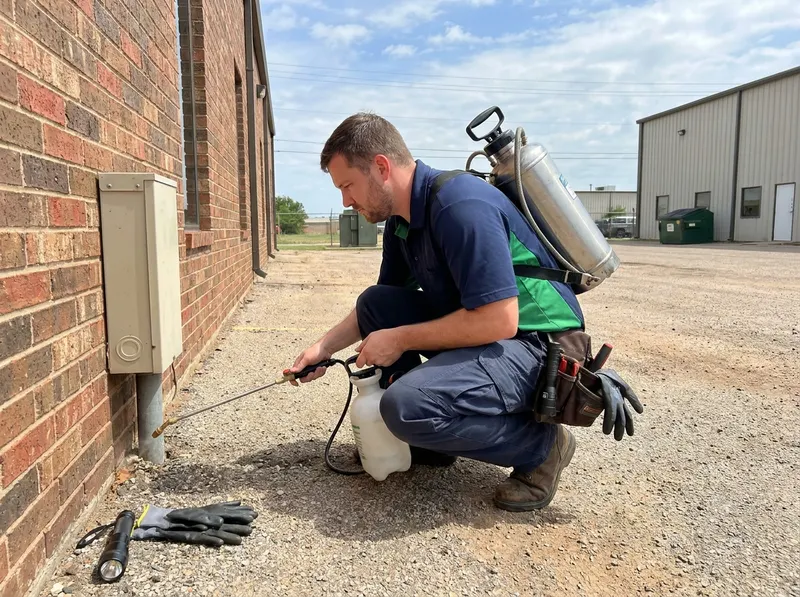
Commercial structures throughout Oklahoma City present distinct structural vectors depending on architectural era and operational use. Brick inventory warehouses and dining facilities across Deep Deuce, Midtown, and the Plaza District often feature aging masonry mortar, shared floor-drain manifolds, and unsealed loading bays that permit subterranean pests to enter. Food handling operations face strict municipal public health benchmarks, where the detection of Blattella germanica (German cockroaches) inside commercial refrigeration motor housings or dishwashing stations requires rapid, non-volatile insect growth regulators rather than broadcast surface sprays that could risk chemical cross-contamination. In retail and creative spaces throughout The Paseo Arts District and Capitol Hill, older floor plates frequently lack modern vapor seals, allowing high moisture gradients that attract wood-boring insects and domestic silverfish along baseboard perimeters.
Modern retail centers near Quail Springs and distribution hubs along the Nichols Hills Suburban Edge face different pest dynamics driven by outdoor compaction units, high-volume pallets, and extensive HVAC conduit runs on flat membrane roofs. Routine commercial pest management relies on precise mechanical exclusion: installing physical bristle sweeps on 10-foot overhead dock doors, applying non-hardening polyurea sealants to foundation conduit entries, and anchoring secure exterior rodent stations every 30 to 50 linear feet along exterior parapets. If a facility manages daily wet food production, a localized insect bait matrix paired with biological drain foaming addresses the biofilm breeding grounds of drain flies without disrupting production schedules; if a space is a dry packaging warehouse, perimeter micro-encapsulated barrier barriers intercept wandering arachnids and dermestid beetles. The operational trade-off centers on service frequency: heavy organic waste facilities require bi-weekly preventative monitoring to interrupt 21-day pest reproductive cycles, whereas low-traffic medical suites or office corridors typically maintain defensive barriers through monthly or bi-monthly inspections.
Every job gets a firm, written price after a free on-site visit.
Tell us about your commercial pest management job in Oklahoma City and we'll send a clear, written quote, usually the same day.
 Zorevia Insect Specialists